

UNLOCKING JUST TRANSITIONS.
Transforming systems for just and sustainable development pathways.
Southern Transitions is a climate and transition think tank working to advance just transitions in the Global South. We are focused on transformative economic opportunities for systems that are changing, emerging, and scaling up in the transition.


ABOUT US
VISION
Real pathways to just, sustainable, futures for the Global South.
MISSION
We empower decision-makers to collectively identify, open and harness real opportunities for just transitions, using evidence, experiments and new ideas.
OUR WORK
We have established a programme of work that links four key areas. We identify real transition opportunities as the Global South responds to climate change, and we formulate viable business cases for building and upgrading value chains. Climate change is a global challenge: we offer technical support in multilateral processes, to empower Global South actors to negotiate across multilateral processes. Finally, we catalyze action through our living lab — a collaborative, “do-tank” that moves just transition initiatives forward.

JUST TRANSITION TECHNICAL SUPPORT IN MULTILATERAL PROCESSES
Empower Global South actors to negotiate for and advance just transitions through multilateral processes, including the climate change negotiations (UNFCCC) and the G20.

BUILDING & UPGRADING VALUE CHAINS
Formulate viable business cases for Global South countries to harness value chain upgrading opportunities in the transition.

TRANSITION OPPORTUNITIES
Identify, characterise, and interrogate real opportunities (economic, political, and social-ecological) in the climate transition for broad, structural transformation in the Global South.

LIVING LAB
"Drive implementation of creative just transition initiatives in the Global South through partnerships, experimentation, and learning.
The leadership team has a track record for successfully developing value-adding solutions and project management.
Individually and together, team members work collaboratively and foster long-term trusted relationships, entrepreneurial spirit, and a commitment to delivering impactful solutions to meet the challenge of just transitions to net-zero development pathways.

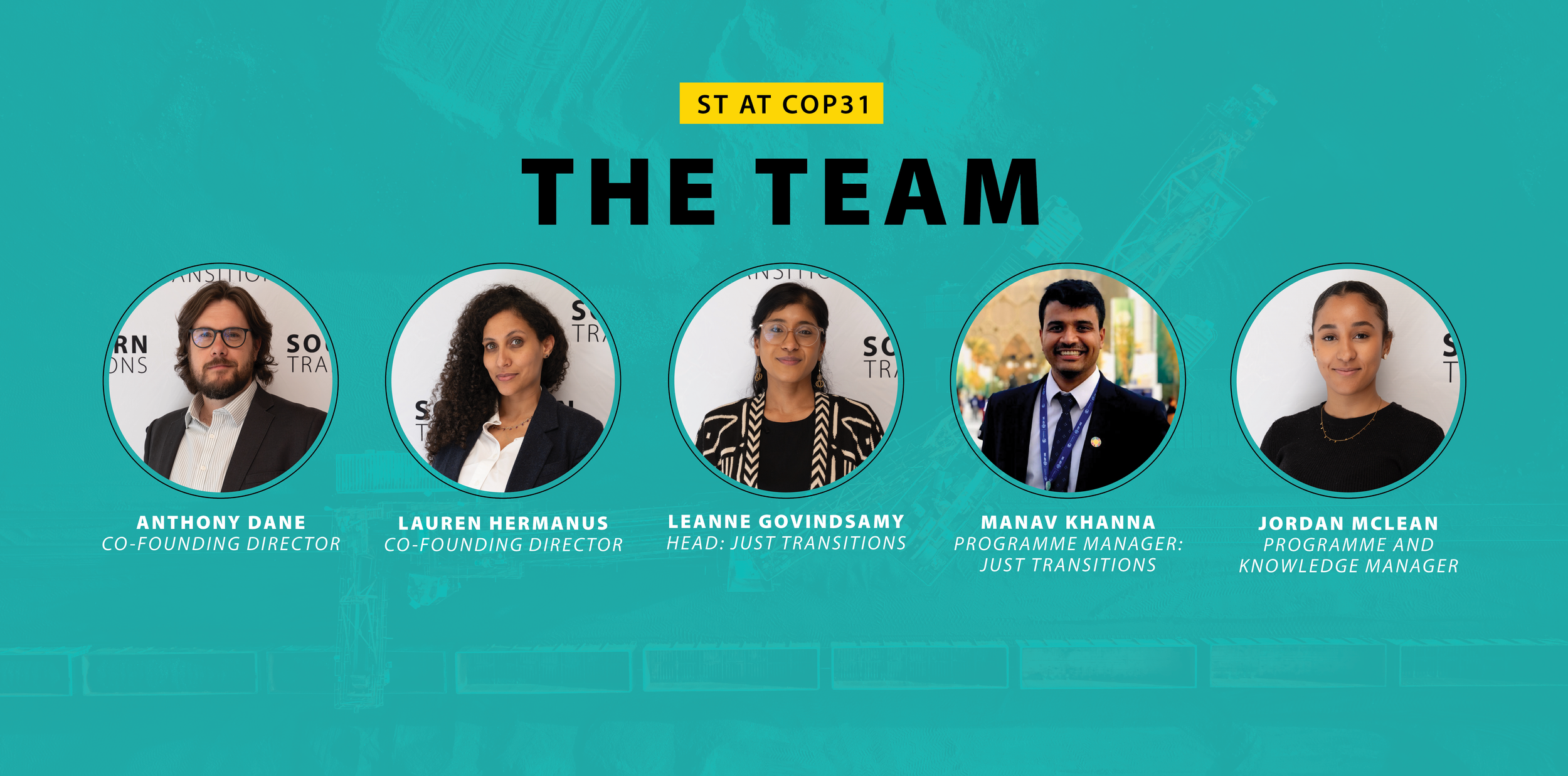
Image: Gaylor Montmasson-Clair, Lauren Hermanus, and Anthony Dane, are the three co-founders and Directors of Southern Transitions.
How can the Just Transition Mechanism move from agreement to implementation for developing countries?
FEATURED REPORTS —
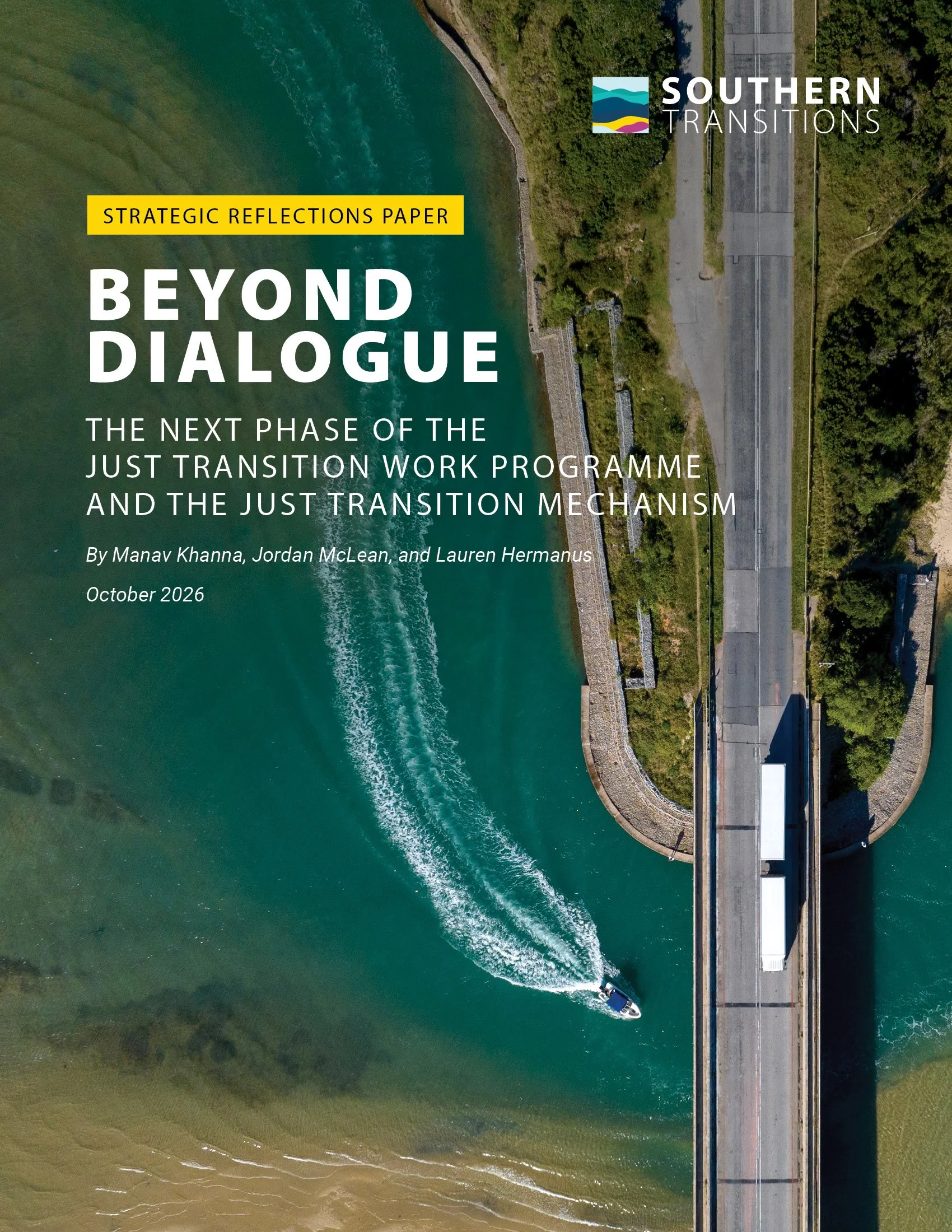
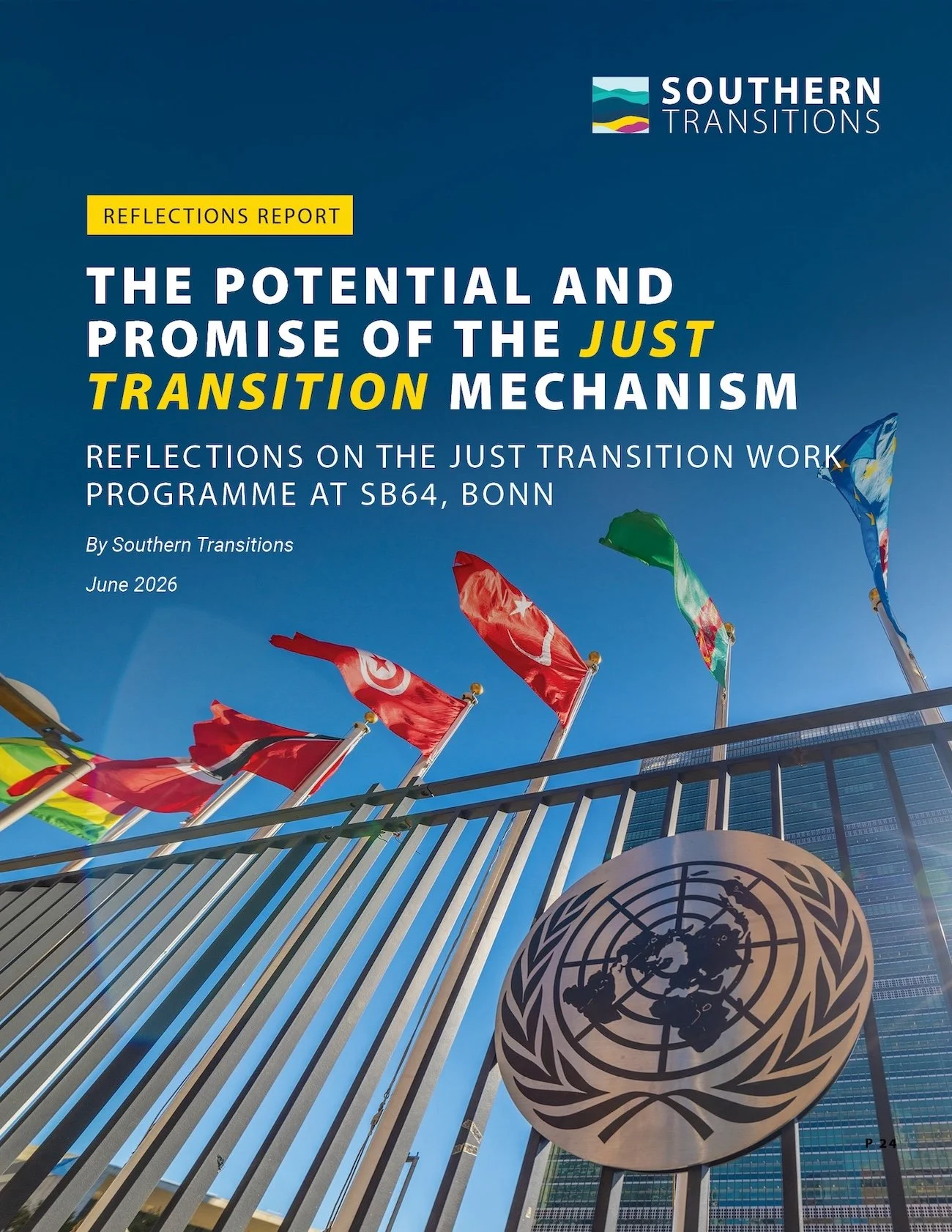
The Just Transition Mechanism (JTM), agreed at COP30, is the most significant institutional outcome on just transitions under the Paris Agreement. But agreeing to it was only the first step in institutionalising international cooperation for just transitions. At SB64 in Bonn, Parties had to build the process for operationalising the Mechanism while deep political divides over its ambition, independence and scope continued to play out. What the JTM becomes over COP31 and COP32 will determine whether just transitions can be delivered for the majority of the world or whether they remain hindered by a lack of implementation.
Two complementary reports from Southern Transitions examine the negotiations that will shape the future of just transitions in the UNFCCC. The first reflects on SB64, setting out the three negotiating mandates, the contested terms of reference for the review of the Just Transition Work Programme (JTWP), the controversy over the Secretariat’s mapping exercise, and the persistent efforts to constrain the JTM’s ambition. It also looks beneath the formal agenda at the tensions over the Global Stocktake, finance and trade that will define the road to COP31 and beyond. The second paper looks at how this debate is shifting from defining just transitions to building the architecture needed to implement them. Drawing on our whole-of-economy, whole-of-society framework, this paper sets out African and other developing country priorities and asks what international cooperation on just transitions must deliver in practice. Together, they make the case that implementation, not further dialogue, is the test of the JTM.